The sixth edition of the Paediatric Innovation Day brings together the global paediatric innovation community in Barcelona

The sixth edition of the i4KIDS Paediatric Innovation Day brought together more than 400 attendees on 20 November, both in person and online, at the Museu de la Ciència – CosmoCaixa in Barcelona. Coinciding with World Children’s Day, the event once again consolidated itself as a leading forum for reflecting on and promoting innovation in fetal, paediatric and maternal health, connecting the local ecosystem with experts and organisations from around the world.
Organised by i4KIDS, the paediatric innovation hub coordinated by Sant Joan de Déu Barcelona Children’s Hospital, the programme combined keynote talks, expert panels, research project showcases, a startup pitch competition and networking spaces, all with a shared purpose: accelerating solutions that improve the lives of children, adolescents and their families.
Institutional commitment to paediatric innovation
The event opened with a welcome from Dr Joan Comella, Director of Research, Innovation and Learning at Sant Joan de Déu Barcelona Children’s Hospital and Director of the Sant Joan de Déu Research Institute, who highlighted the importance of firmly supporting research and innovation in clinical practice, particularly in complex fields such as rare diseases.
This was followed by an address from Dr Antoni Plasència, Director of Research and Innovation at the Catalan Department of Health, who reinforced the strategic role of paediatric innovation within the Catalan health and research system and emphasised the need to align public institutions, hospitals, research centres, industry, investors and patients around a shared mission.
Later, Lluís Cassou, Innovation Project Manager at i4KIDS, presented the evolution of the hub and upcoming milestones, underscoring the confirmation of the network’s continuity for the 2026–2028 period, its ongoing growth, and its commitment to strengthening international collaboration and knowledge transfer.

Planetary health, innovation and new models of collaboration
The day’s programme began with the keynote lecture “Advancing Paediatric Innovation and Research through a Planetary Health Lens”, delivered by Dr Jordi Serrano, Global Advisor for Innovation & Research at Sant Joan de Déu and co-founder of P8 Health. During his presentation, Dr Serrano explored the close relationship between child health and major global challenges such as climate change and pollution, and advocated for integrating a planetary health perspective into research, solution design and health policymaking.
Following this, Sofía Ferreira, Innovation Manager at Sant Joan de Déu, and Marta Arenas, Deputy Director at Impact1, presented the results of the first edition of the Impact4Kids programme , a transatlantic acceleration initiative jointly led by i4KIDS and the Impact1 team (Stanford Biodesign), which was announced during last year’s Paediatric Innovation Day and is now preparing its second edition for next year.

Impactful research: projects from the i4KIDS ecosystem
As a new feature this year, the Paediatric Innovation Day premiered a series of research videos showcasing projects developed within the i4KIDS ecosystem and focused on paediatric and maternal health.
The first video presented Nano4Pregnancy, a project from the Institut Químic de Sarrià aimed at developing a therapeutic solution for pregnant women diagnosed with breast cancer. The video offered the audience an insight into the reality faced by these patients and the scientific, clinical and ethical challenges involved in their treatment.
Later in the day, the programme introduced IMPROVA, from Parc Sanitari Sant Joan de Déu — a digital platform designed to provide tools and resources that support the emotional wellbeing of adolescents, teachers and families, in a context of growing concern around young people’s mental health.
The third video focused on Fantastic Quest, a virtual reality game developed at Sant Joan de Déu to support the rehabilitation of patients with spinal muscular atrophy. This initiative is part of i4KIDS-4RARE, a 24-month EU-funded project that promotes innovative solutions for children with rare diseases, with a particular focus on cardiology, neurology and rehabilitation, and on advancing new orphan medical devices.
Advanced therapies, rare diseases and artificial intelligence
The first major debate of the day focused on “Advanced Therapies for Paediatric Rare Diseases: From Promise to Access”. Moderated by Joana Claverol, Head of the Clinical Research Unit at SJD Barcelona Children’s Hospital, the panel brought together Dr Laura Carrera from the Neuromuscular Disorders Unit at Sant Joan de Déu, Javier García, co-founder of Columbus Venture Partners, Jesús Merino, president of the association La Lucha de Abril, and Diego Pignataro, Project Management Manager for SPG50 at Viralgen.
The round table explored both the vast potential of advanced therapies to transform the prognosis of paediatric rare diseases and the challenges that remain in ensuring real access to these treatments: sustainability, financing models, regulatory timelines, industrial development, clinical trials involving small populations, and the need to place patients and families at the centre of the entire process.
This block was concluded by Mrs Pilar Díaz, the Territorial Delegate of the Government of Catalonia in Barcelona, who expressed the commitment of public institutions to supporting the patients and families who work each day to improve and advance treatments for paediatric rare diseases.

After a break in which attendees were able to share impressions and make new connections, the focus shifted to another major driver of change in child health: artificial intelligence. The panel “Artificial Intelligence in Paediatrics” was moderated by Pekka Kahri, Director of Innovation at HUS Helsinki University Hospital, and featured contributions from Lia Butler (NeoPredics AG), David Torrents (Barcelona Supercomputing Center) and Dr Yolima Cossio (Data and Digital Transformation Director at SJD Barcelona Children’s Hospital).
The discussion explored the current state of AI in paediatric practice, the role of clinical and research data, the challenges of interoperability and governance, and the opportunities for developing predictive tools and clinical decision-support systems that are safe, equitable and truly patient-centred.

The morning concluded with a keynote by Dr Iain Hennessey, Clinical Director of Innovation at Alder Hey Children’s Health Park (United Kingdom), titled “How to Build a Batcave 2.0”. Drawing on the experience of Alder Hey’s innovation hub, Dr Hennessey illustrated how to create ecosystems in which industry, academia and clinical professionals work closely together, bringing innovation directly into the day-to-day environment of paediatric hospitals.

Music, patients and experience: innovation centred on people
One of the most moving moments of the day was led by Nora Navarro, a patient at Sant Joan de Déu and a member of the KIDS Barcelona youth advisory council since 2018. Her performance of Coldplay’s “The Scientist” wove together music, science and hope, reminding everyone that paediatric health innovation only truly matters when it improves the real lives of the children it is meant to serve.

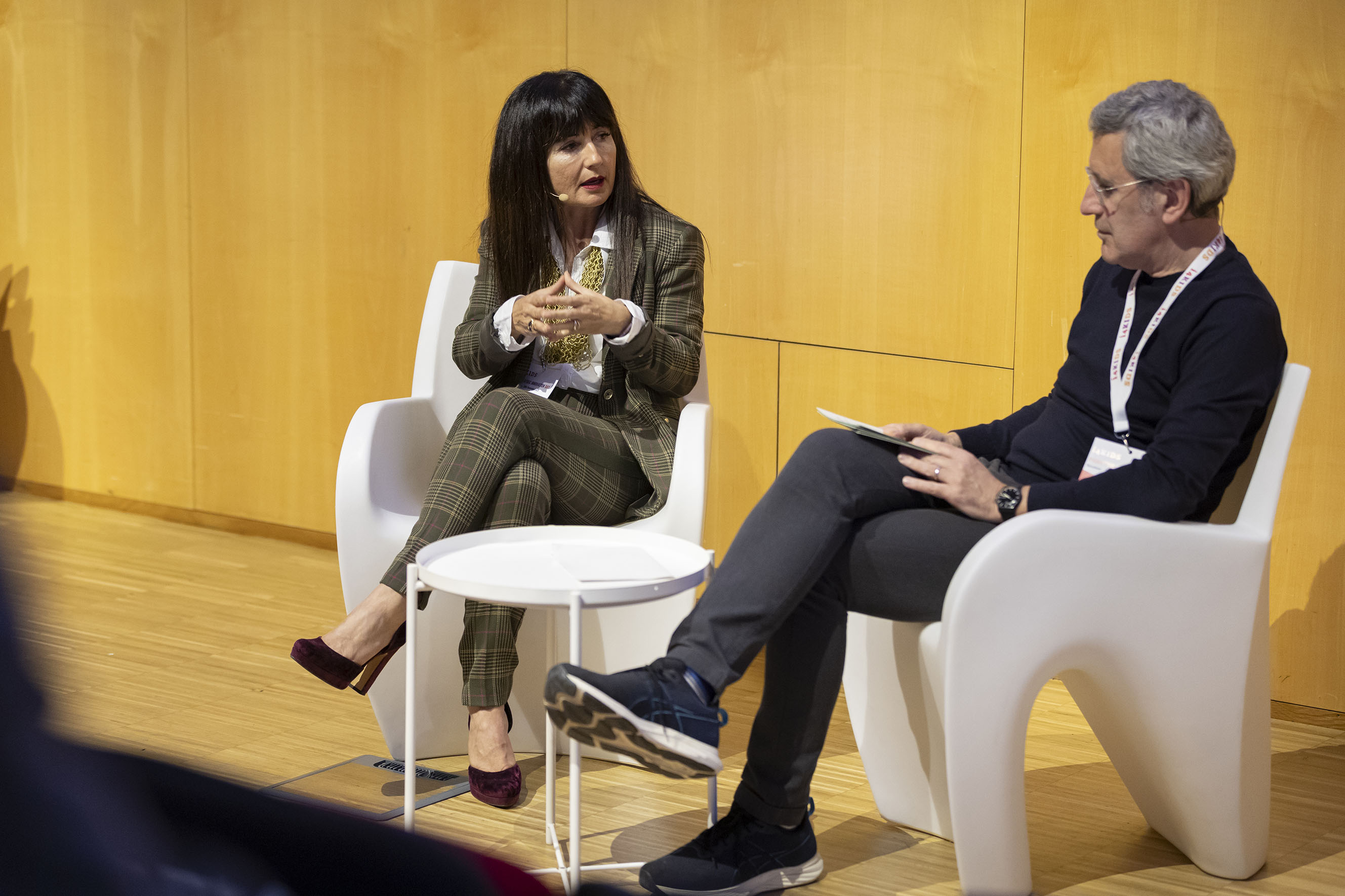
The human dimension returned explicitly in the fireside chat “Innovating with Purpose: Putting Patient Experience at the Centre”, featuring Dr Joan Vinyets, Head of Patient Experience at SJD Barcelona Children’s Hospital, and Isabelle Belles, Director of Clínica López Ibor. Both reflected on how innovation is only truly transformative when it systematically incorporates the voices of patients and families, and on how data, design, empathy and leadership can be combined to create more human-centred care experiences.

Investment strategies for paediatric innovation
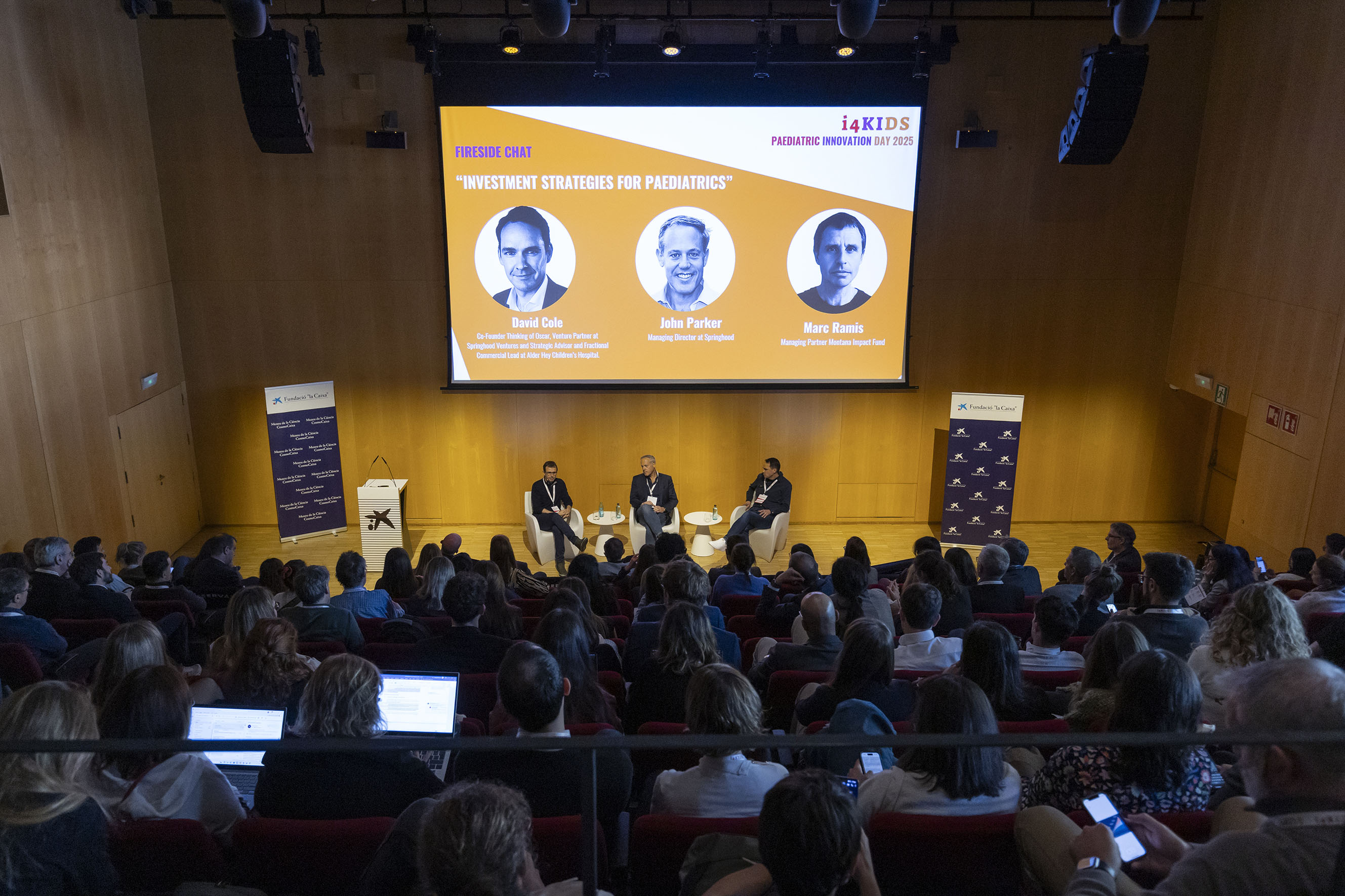
The programme also dedicated a key space to addressing the need for more investment funds specialised in child health, impact-driven models, collaboration with hospitals and research centres, and the role of long-term investment in supporting startups beyond their earliest stages of development.
David Cole, John Parker and Marc Ramis led this block of content, titled “Investment strategies for paediatrics”. With complementary backgrounds across entrepreneurship, venture capital and philanthropy, the speakers offered a global perspective (from the United Kingdom, the United States and Europe) on how investment in paediatric health is evolving, and what is needed for more technologies, therapies and services to reach the market and be integrated sustainably into healthcare systems.

Seven projects in the i4KIDS Acceleration Programme 2025 Pitch Competition
One of the most anticipated moments of the day was the Pitch Competition of the i4KIDS Acceleration Programme 2025, which brought to the stage the seven participating projects in this year’s edition. All of them received tailored training to advance the development of their high-potential solutions in fetal, paediatric and maternal health; five originated from the i4KIDS community and two were supported through the ITEMAS network.
The participating teams were:
INSULA – presented by Mariano Cabezas
Relapse Prevention – presented by Ricky Tirtakusuma
BIO-VAPP – presented by Dr Carmina Guitart
Fetal Sealing – presented by Dr Elisenda Eixarch
HipCare – presented by Arsenio Andrea
DarApp – presented by Rubén Nieto
MIP – Micro Intelligent Port – presented by Pamela Lustig
Each team had five minutes to pitch and three minutes for questions from the jury, who evaluated the potential impact, feasibility, degree of innovation and clarity of communication. The jury was composed of María Sanchís, Enric Barba, Josep Ballesté and Pilar Puig-Sàrries.
After the presentations and deliberation, the winning project was “Relapse Prevention”, which received the award for this edition of the i4KIDS Acceleration Programme.

Looking ahead: a growing international network
The closing remarks by Arnau Valls, Director of i4KIDS and i4KIDS-Europe and Innovation Coordinator at Sant Joan de Déu, brought the day to an end. Valls expressed his gratitude to the speakers, teams, jury members, patients, partners and attendees, and highlighted the role of the Paediatric Innovation Day as a platform for building alliances, sharing knowledge and accelerating projects with real impact on children’s health.

Following this sixth edition in Barcelona, the next stop will be Helsinki, where the 2026 edition will take place, further strengthening the European and global vision of i4KIDS.


Featured

Featured

Featured